
Contract Manufacturing
Is It Difficult to Set up Contract Manufacturing?

In 2018, the global Contract Manufacturing Organisation (CMO) was valued at $92.42 billion. Business is booming, and more companies than ever are now using contract manufacturing.
So, what is it, and is it right for you?
Let’s find out.
What Is Contract Manufacturing?
Businesses that use contract manufacturing hire other companies to produce their products for them. This provides smaller businesses with a significant advantage.
They can sell their products on a large scale without needing the assets required to run a large warehouse or factory.
It’s the dream of any entrepreneur or business owner: Your product will be manufactured swiftly and sold in vast quantities by a contract manufacturer.
This process can save time and money, all while increasing the reach of your business. A contract manufacturer can be based anywhere, but China and the U.S provide some of the most popular services.
The Benefits of Contract Manufacturing
Businesses of all shapes and sizes can benefit from contract manufacturing. Here are just a few of the ways it can help you:
The Hiring of Service or Labor
With contract manufacturing, it’s also possible to subcontract labor. For example, if you’re a smaller company, you might not have enough employees to make your production process run smoothly.
In these cases, you can outsource. This method is popular with many large-scale manufacturers, especially as you’ll be able to select manufacturers who are experts in your specific field.
You Gain an Operational Advantage
If the demand for a specific product is high, and a contract manufacturer can provide the capacity to meet this demand, you’ll generate more profit.
In some cases, you’ll also be able to work with contract manufacturers if you’re looking to pilot a new product. They’ll be able to test the market for you before you launch into large-scale manufacturing, saving you time and resources.
Flexibility
This is one of the most significant benefits of contract manufacturing. They’ll have the resources, time, and manpower to adapt to the specific needs of your product.
This means it can often get to the market quicker than you can achieve by working in-house.
You’ll also find that many suppliers offer a range of services. These can include warehousing and 3PL services, quality inspection and testing, manufacturing, order consolidation, assembly, IP servicing, and more.
If you outsource and select the appropriate supplier, the expansion opportunities are vast. Your customers will also be satisfied with more resources.
CM’s can provide high-quality testing and assembly, so your products are guaranteed to be safe and fully functional.
You Can Enter Different Markets
As a merchant, it can sometimes be hard to trade and perform business in other countries.
When you outsource and provide contracts to manufacturers in different countries, you’ll find it much easier to sell your products outside your national market.
It can also be cheaper to enter other markets through contract manufacturing, so you’ll give yourself the best chance to generate more profit.
You Can Dedicate More Time to Selling
Marketing is an important business. Suppose you can’t target potential consumers effectively. In that case, the quality of your products won’t matter because you won’t be reaping the rewards.
If you use contract marketing, you’ll be allowing other people to handle the practical side of your business while you focus on selling. As a result, you’ll be able to strike a better balance and give yourself a fighting chance in the market.
High-Quality and Low-Cost
Your products will be safe in the hands of professionals who can use their expertise to maximize the quality of your products. Many contract manufacturers are experts in production activities.
They can often perform this work to a higher standard than most businesses who choose not to outsource.
What Are the Disadvantages?
The benefits of contract manufacturing are substantial, but the process doesn’t come without its disadvantages. These can include the following:
Lack of Control
You’ll lose control over your production activities. If you have solid and existing production skills, you might choose not to outsource. If you’d prefer to hand-pick your employees yourself, this may also be a problem.
Although you’ll be able to select the manufacturer yourself, you won’t be able to choose individually or approve the people who manage your products. Your CM will take care of this for you.
Potential Delivery Delays
Contract manufacturers work on a colossal scale. Sometimes, due to a heavy workload, they may not produce products on time, and your customers could experience some delays.
Potential Outsourcing Problems
If you choose to outsource abroad, you could be interacting with people who speak different languages and live in different time zones. If you’re impatient, communication could become stressful for all parties involved. Make sure you’re happy with who you’re outsourcing to.
What channels will you use to communicate? Are you happy to speak with manufacturers in different time zones, even if it’s not during your business hours? These are all critical questions to consider.
Are You Ready to Get Started With Contract Manufacturing?
We hope that having read this blog post you now have a clearer idea of why you need contract manufacturing.
If you’re looking to hire a labor force, access better equipment and facilities, and/or have goods built, contract manufacturing could be a perfect solution.
You’ll also be able to negate start-up costs, improve product quality, concentrate on your brand and keep up with seasonal demand.
Contract manufacturers like Shield Works offer companies an array of different services and high levels of expertise. So if you’re looking for a reliable manufacturer and want to move your production to China, contact Shield Works today for more information.
All About Contract Manufacturing in China: 5 Tips

It’s no secret that outsourcing your manufacturing obligations can save you plenty of time and money. In fact, China is one of the most popular destinations to do so.
But, not every entrepreneur knows everything they should about contract manufacturing in China. So, we’ve put together a guide with all the details you should keep in mind.
Let’s get started.
1. You Need to Find a Reliable Supplier
As you might guess, you’ll need to find a reputable supplier before you can move forward with your manufacturing obligations. Although this responsibility can seem overwhelming at first, is not as difficult as you might anticipate.
In general, you’ll want to consider the following factors before you make your decision:
- The size of the factory
- The location
- Total production capacity
- Exclusivity
To elaborate on this last point, you should decide whether or not you want your supplier to exclusively manufacture for your business during the production process. Once you’ve figured out the necessary criteria, you can begin your search.
Keep in mind that either you or a dedicated professional must visit the actual facility before production begins. This is to ensure that the facility meets all your needs and that you aren’t being misled.
2. You Must Register Your IP
Unfortunately, many entrepreneurs are unaware of the fact that they need to register their intellectual property in China. This means that you should pursue any necessary patents, trademarks, or copyrights.
Foregoing this obligation can easily become a significant obstacle for your production process if another entity in China decides to register your IP under their name.
Not only will this prevent you from manufacturing a product, but you could also run into legal issues for infringing upon their copyright. Due to the murkiness of international law, it can be highly difficult to prove that you were the original creator and owner of a particular IP.
Even after you have registered your IP in China and found a reputable manufacturer, there is one extra step you need to take.
You must have your manufacturer sign a nondisclosure, non-use, non-circumvention (NNN) agreement in order to further protect your rights. Anyone who attempts to avoid this obligation is someone that you should never work with.
3. Prioritize Quality Control
Ideally, you would be able to provide your manufacturer with the necessary information and then receive a high-quality product. But, this isn’t always how things turn out.
It’s not uncommon for you to encounter quality issues while outsourcing your production overseas. Fortunately, though, this is often a result of misdirection that can be resolved through communication.
The best way to accomplish this is to have a third party regularly conduct QC checks during the production process. This will allow you to catch issues as quickly as possible and then take steps to remedy them.
Failure to do so could easily result in dissatisfied customers, delayed deadlines, etc. Put simply, brushing off your quality control obligation comes with a strong risk of hurting your brand’s image.
4. Preserve Approved Samples
It’s not abnormal for different batches of products to have inconsistencies between them. To elaborate, the first few rounds of Chinese contract manufacturing may meet your standards while subsequent batches may fall short.
To help keep everything on track, it’s essential that you preserve copies of approved samples. This will give your manufacturer a solid reference that they can strive to duplicate in the future.
Additionally, you can use an approved sample as an index of whether or not a current batch meets your standards. If it doesn’t, your manufacturer is obligated to make changes.
But, these can take a significant amount of time to complete. This also means your manufacturer may not be able to adhere to your time constraints.
So, it’s in your best interest to have multiple high-quality samples that your manufacturer can use in order to streamline the production process. In the event that your standards change, you should obtain new samples as quickly as possible.
5. Establish an Original Equipment Manufacturer (OEM) Agreement
For those who are unfamiliar with this type of document, this is an agreement between you and your manufacturer that aims to remove any form of ambiguity in your relationship.
This means that you need to elaborate upon any minute details that could cause complications in the future. In practice, you’ll find yourself having to clearly define the color you want your product to be, the projected timeline, etc.
In fact, colors are defined by Pantone number as opposed to terms like ‘red’ or ‘blue.’
Other factors to consider include:
- Ownership of tooling
- Dispute resolution
- Payment terms
- Quality requirements
- Certification
The same can be said about product weights and dimensions. In addition to all of this, you’ll need to ensure that this agreement is enforceable in China and not just the United States.
This often means working with a Chinese legal professional to help you navigate the nuances of Chinese law. Additionally, it’s required that you write the document in Chinese.
Otherwise, your manufacturer could break all of your guidelines and suffer no consequences.
Contract Manufacturing In China Can Be Game-Changing
So, it’s essential that you keep the above information in mind. From here, you’ll understand everything you should about contract manufacturing and can then make the most of this opportunity.
Want to learn more about what we have to offer? Feel free to reach out to us today and see how we can help.
The Benefits of Chinese Manufacturing
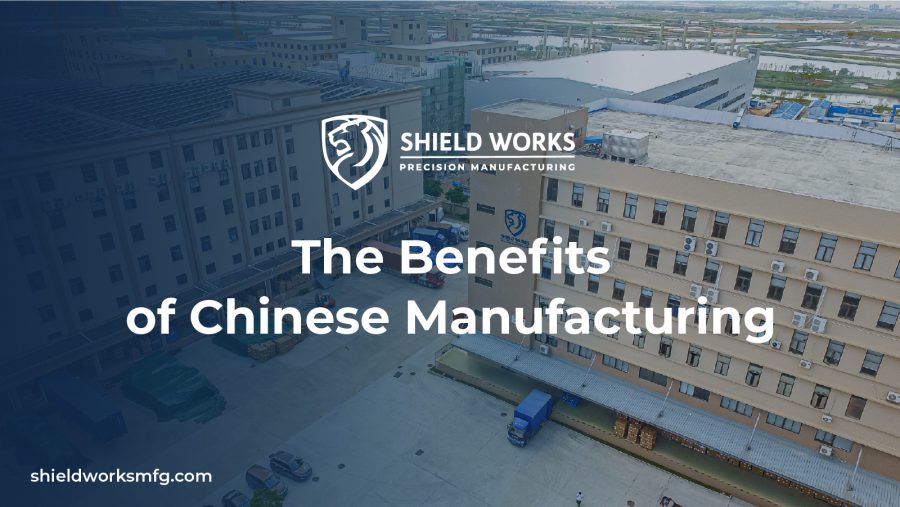
Are your manufacturing costs running your business into the ground? Are you looking for a better way to have your goods produced? If so, you should consider turning to Chinese manufacturing.
There are several benefits of choosing a foreign manufacturer. To help you determine whether it’s the right decision for you, we’re going to discuss those benefits below.
Lower Costs
The most obvious benefit of Chinese manufacturing is lower costs. Costs are lower in China for a variety of reasons.
For one, there are fewer regulations on Chinese businesses. As such, they have much lower overhead costs. This enables them to produce an item at a lower price, thus allowing them to pass a lower price on to the customer.
There’s also the fact that labor costs in China are substantially lower than in the United States. Workers don’t need to be paid as much, thus lowering the overall cost of manufacturing. Again, these savings are passed on to the consumer.
If you want high-quality products at a very reasonable price, having your products made in China is the ideal option. You’ll save tons of money, allowing you to get your business out of the red as soon as possible.
More Products
Not only do Chinese manufacturers work cheaply, but efficiently as well. As such, they can produce a substantial number of products in just a short amount of time.
This could bode well for your business, especially if you’re struggling to keep up with demand. The rapid manufacturing pace of Chinese factories will maintain a steady stream of products into your warehouses. You’ll never have to worry about whether you have enough supply on hand.
What makes Chinese manufacturing so efficient? 1. Less regulation, and 2. Practice! These companies have fine-tuned their operational processes, allowing them to be extraordinarily consistent in their manufacturing efforts.
Easy Scalability
Odds are, your business won’t stay the same size forever. At some point, you’re probably going to want it to grow. After all, it’s growth that increases revenue, and increasing revenue is one of the primary goals of running a business, right?
The key is for you to have a manufacturer who can keep up with demand when the time comes. Chinese manufacturers are more than suited to do so.
As was noted above, Chinese manufacturers can produce unbelievable amounts of products in just a short amount of time. So, if you ever need to scale up your business, a Chinese manufacturer will be able to accommodate you. Just make the call and your wish will be granted.
Knowledge of the Product
It doesn’t matter what your product is. Odds are, there is a Chinese manufacturer that has manufactured it at length. This is a good thing, as it means that your product can be made to perfection.
This wouldn’t necessarily be true of other types of manufacturers. After all, if they’ve never manufactured your product before, they’re likely not going to do it perfectly the first time. In fact, it could take months or even years before they’re able to adequately manufacture your product.
Utilizing Chinese manufacturing allows you to take advantage of a tried and true knowledge base. These manufacturers have manufactured your type of product many times before and will have no problem doing it again for your business.
An Enhanced Ability to Try New Products
You’ve been selling a single product for a while now, and have seen some good success along the way. But, at this point, you’ve reached about as high as you can reach with it. For this reason, you’re considering selling new products in addition to your original product.
The issue, of course, is that it costs money to sell new products. But with Chinese manufacturing, you can greatly reduce your cost obligation, thus making it easier (and less risky) to facilitate the change.
Were you to use an American manufacturer, you would have to pay a substantial amount of money just to get the new product made. This would be fine if you knew that the product would sell as intended, but you can’t make that guarantee. In other words, it’s tremendously risky.
So, if you’re interested in expanding to new products, there’s really only one option: you have to use a Chinese manufacturer.
Good Quality
When you think of Chinese manufacturing, you might think of poor quality. Yes, in some cases, that is certainly true. After all, not all manufacturers are created equal.
But that’s the case in the United States as well, just as anywhere else. In the end, it’s all about the manufacturer you choose. Some will do a good job, some will do a decent job, and some will do a fantastic job.
Just be sure to vet your manufacturer before signing any contracts. Ask to see examples of their past work and make sure that you’re totally satisfied with the quality.
Remember: Chinese manufacturers have devoted substantial amounts of time working on these products. As such, many of them have perfected the processes, and know exactly how to create the product in question.
Interested in Utilizing Chinese Manufacturing?
What do you say? Are you interested in utilizing Chinese manufacturing? If so, we here at Shield Works are the people to see.
We manufacture a wide variety of goods and do so at a low rate. If you’re at all interested in manufacturing in China, we have you covered.
Contact us today to discuss your needs!
Know How Custom Manufacturing Company In China Help With Your Business
Custom manufacturing is the ability to manufacture, design or engineer original products in line with personalised requests. This is done on a made-to-order basis, giving you complete control over the manufacturing process.
Reputable and Experienced
Unlike most other manufacturing companies, the custom manufacturing company can adapt to your personal needs. They can offer you fully customised manufacturing procedures and equipment. In addition, they can even develop bespoke assembly lines to meet your requirements.
With the ability to operate flexibly and adapt quickly to innovative ideas, Shield Works is reputable due to our parent company’s 14 years of experience. China 2 West has knowledge of every stage in the manufacturing process. It means that Shield Works begins as an expert in a vast range of areas.
Open-minded
Shield Works welcome any new ideas related to customised Manufacturing from our clients. We also accept the challenge by offering a vast amount of dedication and support for such ideas. This support can come in the form of: new training, new equipment, techniques and even specialized processes. All of these can be introduced at our facility, helping to enhance our manufacturing strategies. We are able to bring your ideas to life.
Protect Your Interest
Our commitment to customised manufacturing stems from our belief in moving forward and improving business. Driving forward with the latest innovative products and strategies is crucial in continuous growth and success and we want to share this vision with our clients.
Furthermore, you can be sure that when discussing new ideas there will be no losses in communications. Our diverse team can speak an array of languages, including Chinese. So we can deal with new ideas smoothly and directly.
The custom manufacturing company In China can help If you have a special process you would like to relocate from your shop floor. What’s more, they might offer critical IP sensitive step of the manufacturing process that you would prefer to keep away from your Chinese supply chain.
Shield Works also offers you a vast range of IP protective steps to give you extra security. It’s important when doing business abroad, in case our customised manufacturing wasn’t quite enough for you. For example, Shield Works has state-of-the-art finger print access secure production zones to protect your interests and provide full IP protection at the source of manufacture. We will also have legally binding non-disclosure agreements with every external body that we may work with during the process of your assembly line in order to ensure this is protected.
Get in touch with us today to discuss your custom manufacturing requirements. You can also visit our website for more information about Shield Works’ customised manufacturing.
Contract Manufacturing China: How to Find the Right Manufacturer
Are you tired of the expensive cost of contract manufacturing in your home country? You really should consider contract manufacturing in China to help lower your spending!
Knowing how to find a contract manufacturer in China may feel like an intense task. However, it is not as difficult as you might think. All it takes is following a step-by-step process.
To learn how to find the best OEM manufacturers in China, keep reading.
What Is Contract Manufacturing?
If you aren’t familiar with contract manufacturing, let’s cover the basics.
Contract manufacturing means that your company is looking for another company to take responsibility for part of the production process for your products. This can be a great way to collaborate and split duties with another company to complete your production more effectively.
So, how do you find a contract manufacturer in China?
What to Do Before Finding a Manufacturer in China
You’re still searching for a contract manufacturer, but there are still some important tasks you need to complete before you solidify one.
File Your Intellectual Property Rights
This is a very important step. You will need to register your intellectual property rights (or IP rights) in China.
Your product’s IP includes any watermarks, trademarks, and other copyrights associated with it. If you are not the first company to do this, then some other company may step in.
That’s right: the first company that registers IP rights in China is the one who gets them. Even if your company is the only one of its kind, your IP rights could be at risk if you don’t register them in China.
How to Find a Contract Manufacturer in China
Finding the right contract manufacturing in China is essential. You want to make sure you and your contract manufacturer are on the same page when it comes to producing your products.
Here are some things to consider when beginning your search for OEM manufacturers in China.
1. Do Your Research First
The most important thing to do in the beginning stages is to do proper research on product development as well as contract manufacturing in China.
You need to develop your product idea to the fullest. This helps you know how much money and time it will take to create your product in bulk.
It can also give you some idea of what customers want and will expect from your product as well.
2. Know the Kinds of Factories in China
There are three kinds of factories in China, and all of them vary.
A raw materials factory is what it sounds like: it makes everything you will need to make your product to begin with. Once these materials are made, they are then sent to a component factory.
Unlike a raw materials factory, a component factory makes part of your end product but not all of it. That’s a job for the assembly factory.
Again, the assembly factory sounds like what it is. Your product is assembled in full here.
One thing to keep in mind is that not all factories will do all three types of manufacturing work. You will need to double-check with the factory itself to see what they can offer and do for your product.
3. Find the Right Contract Manufacturing in China
Finding OEM manufacturers in China can feel like a dubious task. The good news is that you have several places you can look for options.
One easy way to research potential manufacturers is to look online. Alibaba, MadeInChina, and many other places can lead you in the right direction, but you may have some delays due to the COVID-19 pandemic. There are also trade shows and other opportunities to find contract manufacturing too.
You still need to do your research for the one that fits best with you. You can learn more about Shield Works’ manufacturing services here. As a British-owned manufacturer in China, we know how to overcome cultural barriers to get you the products you need.
Avoid using a sourcing agent: we’re here to help!
What to Do Once You Have a Manufacturer
Once you have a manufacturer picked out, you still need to do a couple of things. Let’s break it down step by step.
1. Draw Up an NNN Agreement in Chinese
An NNN agreement is a “non-disclosure, non-use, non-circumventing” agreement. This means that your IP rights will be protected even further.
It must be written in Chinese so that it is seen as genuine in the eyes of a Chinese court.
2. Create an OEM Agreement
An OEM agreement stands for Original Equipment Manufacturer agreement. This is where you write all of the details of your product. Be as specific as possible.
Like the NNN agreement, this one must be written in Chinese as well. In a Chinese court, the terms of the contract will only be enforceable if written in Chinese.
3. Quality Control
Quality control assurance throughout the production process will save you a headache later. This means making sure you keep certified product samples onhand too.
A good way to do this is to have a third party perform quality control procedures on your manufacturer. Though the factory may have its own quality control team, it is always best to have an outside perspective too.
Contract Manufacturing in China
Finding the right contract manufacturing in China takes time, like anything. When you find the right contract manufacturer, your product’s production process will run smoothly.
Traversing a different culture and language for contract manufacturing is stressful. Lucky for you, Shield Works is here!
Let us be your chosen manufacturer in China. Contact us today so we can get started!
Understanding the Risks of Outsourced Manufacturing
Are you aware that around 20% of small businesses fail within a year?
Your company must stay afloat, even with a suboptimal budget. It’s tempting to jump to outsourced manufacturing because of convenience and quality. However, it doesn’t come without its risks.
So, what are the things you must be aware of?
First, you must know that it’s not a fool-proof solution. Read the rest of our guide to understand it better.
Supplier Risk
Direct arrangements with suppliers from every industry always come with risks. However, the risk can be greater when you’re sourcing from an international supplier. If you plan to outsource, you must carry out a thorough investigation.
You must know the possible source markets and suppliers. After that, you must make an in-depth risk assessment. Check the provider’s possible suppliers to know potential issues that may arise.
Your investigation must include all aspects of the supplier. It includes operations, quality, leadership, and labor. See whether their track record holds up to their promise.
This way, you’ll avoid operation disruptions because your supplier lacks a follow-through. You may also ask other helpful companies who used your potential supplier before. You’ll gain insight into working with them once you made the decision.
Quality Assurance
The results of quality failure are worse when it comes from international sources. Compared to domestic sources, the lead times for transporting products are longer. When this happens, you’ll likely suffer from serious business disruptions.
It can get so bad that it takes several months to correct the problems. To mitigate this risk, you must prepare detailed product specifications for your sources. Tell them that you’ll do some independent quality control inspections from time to time.
Take note, a decline in product quality can damage your reputation. Avoid this and spend a few weeks observing the process of manufacturing. This is cheaper and ensures quality, which is better than discovering you need a recall.
Intellectual Property Protection
Be careful of sharing information with your outsourced manufacturers. Check their origin country and their intellectual property rights first. Otherwise, someone might leak your propriety information.
It often happens when the manufacturer’s country has more relaxed IP laws. Depending on the product, you might find it better not to outsource anything. However, if your product undergoes regular upgrades, this might not be an issue.
If you think you can develop better items faster with better product quality, you may neglect patent protection. This happens when you pump out new products faster than the market’s capabilities.
Brand Reputation Risks
If you’ve been in the business for a long while, you know it takes lots of time to build a brand. Overnight success doesn’t exist because it takes years or decades. Your brand reputation matters, whether your company is local or global.
To minimize the risk to your reputation, you must consider some factors. Here are some:
Transportation and Delivery
Outsourcing to foreign services may also be troublesome if you don’t go through with the contracting process step by step. It may lead to delayed deliveries if not cleared up well enough.
The process of ordering and delivery must have a consistent time frame. Think about whether your outsourced manufacturer can keep a consistent timeframe. If it increases, you must find ways to adjust your customers’ expectations.
You may also look for alternatives to get the time frame back to its proper place. If you can’t, you’ll risk ruining all your hard work. Customers hate waiting for more than they need to, so consider this factor as your priority.
Cultural Differences
It can impact your brand identity between countries. Lots of international brands understand this concept. It allows them to thrive and penetrate markets regardless of the country.
So, ensure that your brand will adjust to various cultures. It must follow expectations, standards, and traditions. It will allow your company to promote a seamless integration.
Sourcing Labor
This conversation isn’t as prevalent. Whenever it surfaces, it can harm your brand. It would be best to get a manufacturer that uses humane standards to make and fulfill your products.
Your manufacturer’s guidelines must be similar to your country’s. It’s especially when it’s labor laws and other related guidelines for employee safety. If your country is a member of ILO, both you and your outsourced help must adhere to its guidelines.
Weather
It seems obscure, but your manufacturer’s weather can affect your brand reputation. Bad weather can result in various delays. It puts your brand in a negative spotlight because you have to reveal your labor force.
The way your provider handles some weather-related situations can bite your supply chain as well. Regardless of their faults, your brand reputation will suffer. It’s why you must put it above everything else.
Is an Outsourced Manufacturing Right for You?
Before outsourcing a manufacturer, you must think about your company’s readiness. You must weigh the advantages of this decision to your company. It matters not what industry you’re in since its benefits and drawbacks remain the same.
Benefits of Outsourcing Manufacturers
The primary reason to do this is to cut your spending. At the same time, it will boost your business’s productivity. Many companies are willing to produce popular demands.
You’ll also avoid every bureaucratic aspect of manufacturing. It’s what bogs companies down, especially for countries with stringent laws.
Drawbacks of Outsourcing Manufacturers
The laborers under your outsourced manufacturer don’t work under you. You have no direct means to boost these people’s mood or morale. If they boycott work because of difficult conditions, your company will suffer.
Invest in Outsourced Manufacturing Today
Despite the risks, an outsourced manufacturing partner can help boost your business productivity. It’s all about finding a reputable manufacturer to work with. Use this information to find the best one around.
Are you looking to work with an international manufacturer? If so, contact us today and let’s talk about boosting your company’s sales.