

SHIELD WORKS · CUSTOM WEARABLE DEVICES

Custom-engineered wearable devices, built to be worn every day.

OEM manufacturing for wearable brands: miniaturised electronics assembly, sealed enclosures, precision finishing, and IP-protected production in Zhuhai.

What we build for wearable brands.

Shield Works manufactures wearable devices at an ISO-certified, British-owned facility in Zhuhai, China.

We assemble miniaturised electronics and integrate them into sealed, precision-finished housings for products worn on the body: bands and bracelets, clips, rings, pendants, wrist-worn devices and connected fitness hardware.

Board fabrication is sourced through the C2W Group’s vetted supplier network; assembly, enclosure manufacture, finishing, functional test and final packing are handled in house.

What Makes Wearables Different

Two products in one envelope.

A wearable is a consumer object and a piece of instrumentation occupying the same few cubic centimetres. The outside is inspected closely and worn in public, so finish tolerances are tighter than the function alone would justify. The inside has to hold a board, a cell and an antenna, stay sealed against sweat and weather, and still leave any sensor a path to what it is measuring.

Those requirements pull in opposite directions, and most of the hard decisions in a wearable programme are about where they meet. That is manufacturing work as much as design work, which is why it goes better when the factory is in the conversation before tooling is cut rather than after.

See the Shield Works difference

Why Choose Shield Works

Built for small, sealed, sensor-driven products.

The design is the company

Your sensor and firmware IP, protected

In a wearable, the enclosure geometry around a sensor and the firmware that reads it are usually the entire defensible position. IP-sensitive builds run in fingerprint-access rooms under NDA, multi-supplier sourcing stops any one supplier seeing a complete design,.


Small boards, tight enclosures

Miniaturised electronics assembly

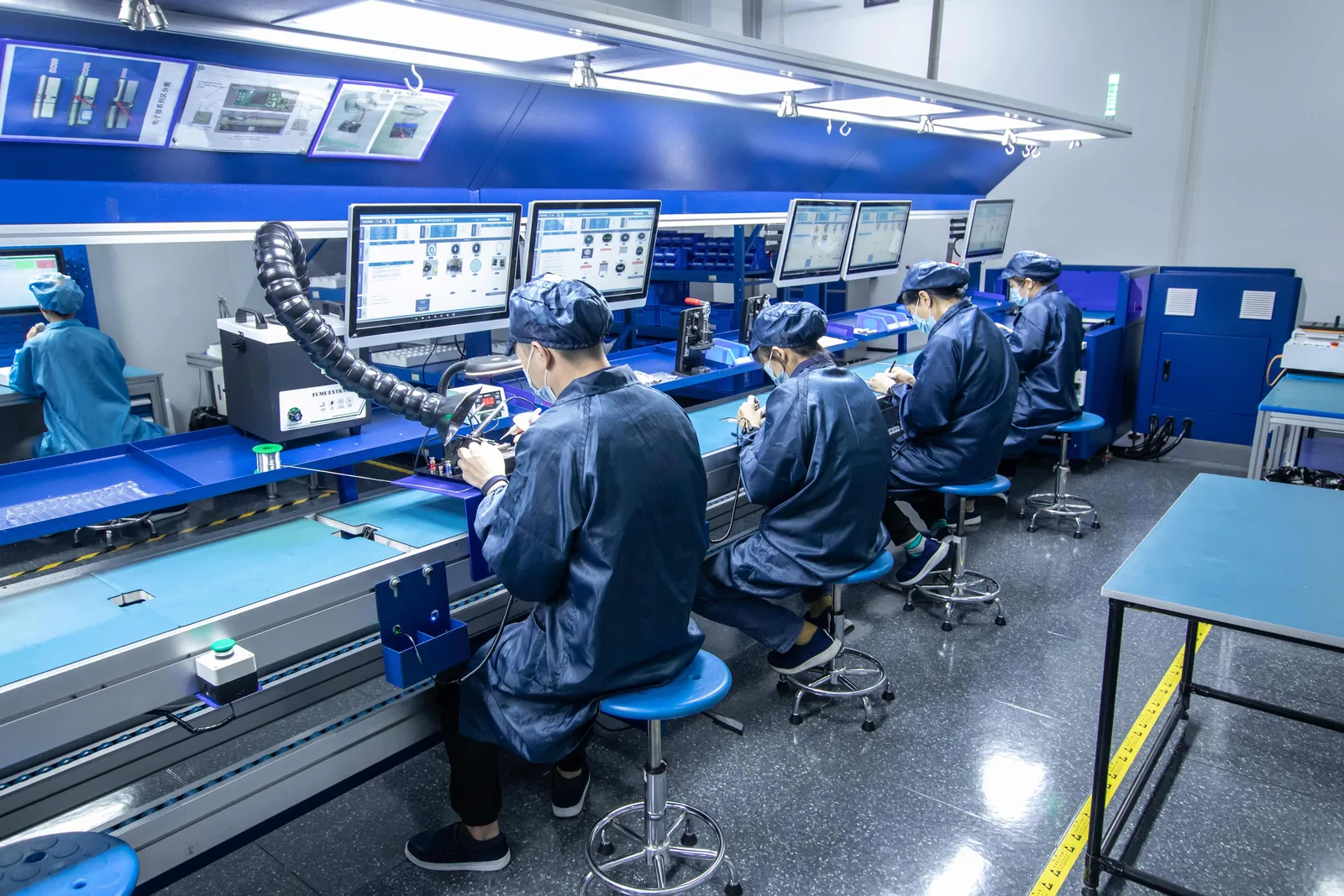
Surface-mount and through-hole assembly, cable and wire harnesses, and full box build run in a dedicated ESD-controlled electronics zone with real-time environmental monitoring. Wearables push component density and enclosure volume at the same time, so assembly sequence is designed alongside the housing rather than after it.

Cosmetics with a tolerance

Finishing treated as an engineering spec

On a worn product the finish is inspected at close range every day, so it needs the same control as a dimension. Polished and brushed stainless, anodised aluminium, ceramic and plated surfaces are specified against agreed boundary samples before the pilot run, rather than argued about from photographs afterwards.

Industrialisation, not a takeover

We work with the engineering partner you already have

Most wearable founders arrive with a design consultancy or an in-house hardware lead already engaged, and want them kept. We take the design into manufacturing alongside them, running DFM against their files and feeding tolerance, tooling and assembly constraints back to their engineers rather than around them.

A boundary we hold

Wellness positioning, not medical devices

We build consumer and wellness wearables. We do not take on regulated medical devices, and we will say so early rather than late. If your product is heading toward a diagnostic claim, that changes your regulatory path and your manufacturing partner requirements, and it is better established before tooling than after.

Plain-English engineering conversations

British management, Zhuhai capability

Shield Works is British-owned and Western-managed, operating a 100,000 sq ft facility in Zhuhai. Behind it sits the C2W Group’s 20 years of China manufacturing and a network of 550+ vetted suppliers, which is where specialist board fabrication and finishing processes are sourced and managed.

Where Wearable Programmes Slip

The six that cost the most time.

None of these are exotic. They are the issues that turn up on wearable projects often enough to plan for, and each one is cheaper to handle before tooling than after.

01

“The prototype works.” It does, by hand.

A prototype assembled once by a skilled engineer with tweezers and patience is not evidence that a line can build it. Wearables fail this test more than most products because the volume is small, the tolerances are tight, and the assembly order is often only in one person’s head. DFM exists to get it out of there.

02

Board fabrication and board assembly are different questions

Founders often ask one question meaning both. Fabricating a dense stack-up with blind or buried vias is a board-house capability, bought against a stack-up and impedance spec. Populating and integrating that board is an assembly capability. We are an assembly and integration facility, and we source fabrication through the group’s vetted network, so ask us both questions separately and you will get two straight answers.

03

Every sensor opening is a hole you have to seal

Anything that senses the outside world needs a path to it, and anything worn needs to survive sweat, rain and hand washing. Those two requirements are in direct opposition, and the resolution is a mechanical design problem involving vents, membranes, gasket geometry and adhesive selection. It is cheaper to solve before tooling.

04

A sealed battery is a decision about the whole product

Choosing a sealed pack with magnetic or pogo charging buys you a smaller, better-sealed product and commits you to a service and end-of-life story, a charging accessory to tool, and transport rules for shipping cells. None of that is difficult, but all of it is easier to plan at DFM than to discover at the freight forwarder.

05

Skin contact changes your material list

A finish that is fine on a handheld device is not automatically fine against skin for twelve hours a day. Nickel release, plating wear at contact points, and coating adhesion under sweat are all testable and all worth testing, particularly where a plated or coated surface is part of the product’s appeal.

06

An IP rating is a test result, not a specification

Writing a rating on a datasheet does not confer it. If your packaging or marketing is going to carry an ingress rating, it needs a tested sample and a report behind it, and the test has to be run on the production-intent build rather than a prototype. We would rather plan that in than watch a claim get pulled after launch.

Our Development Process

From working prototype to first production run.

Most wearable projects reach us with a functioning prototype and a launch window already committed. The process adapts to where your design actually is.

Step 1

Evaluation & consultation

We assess fit against your product and volumes, and issue an NDA before any technical detail is shared. If it looks like a fit, a call confirms scope before we come back with a proposal. All work runs under a paid engagement.

Step 2

Route to Market Plan (RTMP)

A structured, paid roadmap covering DFM, tooling, certification, packaging and delivery, with milestones, costs and lead times. For a wearable this is where the enclosure, the board and the battery stop being three separate problems.

Step 3

Prototyping & design validation

CAD, drawings and materials are refined through prototype iterations in the DFX workshop, including 3D-printed housings for fit and wear checks, so comfort and sensor placement are tested on a body before tooling is committed.

Step 4

Design for manufacturing (DFM/DFMA)

Bill of materials, assembly sequence, tolerances and finish specifications are finalised for repeatable production. In a wearable this is usually where hand-built prototype assumptions get replaced with something a line can build the same way a thousand times.

Step 5

Pilot run & mass production

A pilot run validates assembly, fit, finish and yield at real volume before full production ramps. Cosmetic and functional acceptance criteria are agreed against physical samples, not photographs.

Step 6

Quality control & logistics

In-line and post-production inspection to ISO 9001 protocols, functional test against your defined pass criteria, then packaging, customs documentation and 3PL coordination.

Services for Wearable Brands

Electronics, enclosure and finish under one roof.

The parts of a wearable programme that usually sit with three separate vendors, run in one facility under one project manager.

Miniaturised PCB assembly & box build

Surface-mount and through-hole assembly, cable and wire harnesses, and full enclosure integration in an ESD-controlled zone with in-line verification. See PCB assembly and box build.

Enclosure manufacture & precision finishing

Metal and polymer housings with the cosmetic finish treated as a controlled characteristic: polished and brushed stainless, anodised aluminium, ceramic components and plated surfaces, specified against agreed acceptance samples.

DFM for small-format products

Design-for-manufacturing review focused on what actually bites at this scale: assembly sequence, fastening and bonding strategy, tolerance stack across a small envelope, and service or rework access. See product development and DFM.

Component sourcing & fabrication management

Sensors, cells, connectors, magnets and bare boards sourced through the C2W Group’s 550+ vetted suppliers, with specialist fabrication placed and managed against your specification rather than left to a broker.

Certification & compliance

CE, FCC, RoHS and related certification managed end to end, including the wireless approvals a connected wearable needs, with testing planned against the production-intent build.

Pilot runs, production & fulfilment

Pilot validation, scaled production, packaging, labelling, customs documentation and 3PL coordination, with warehousing available on site. See order consolidation.

The ESD Electronics Room

Wearable electronics are built in a controlled room.

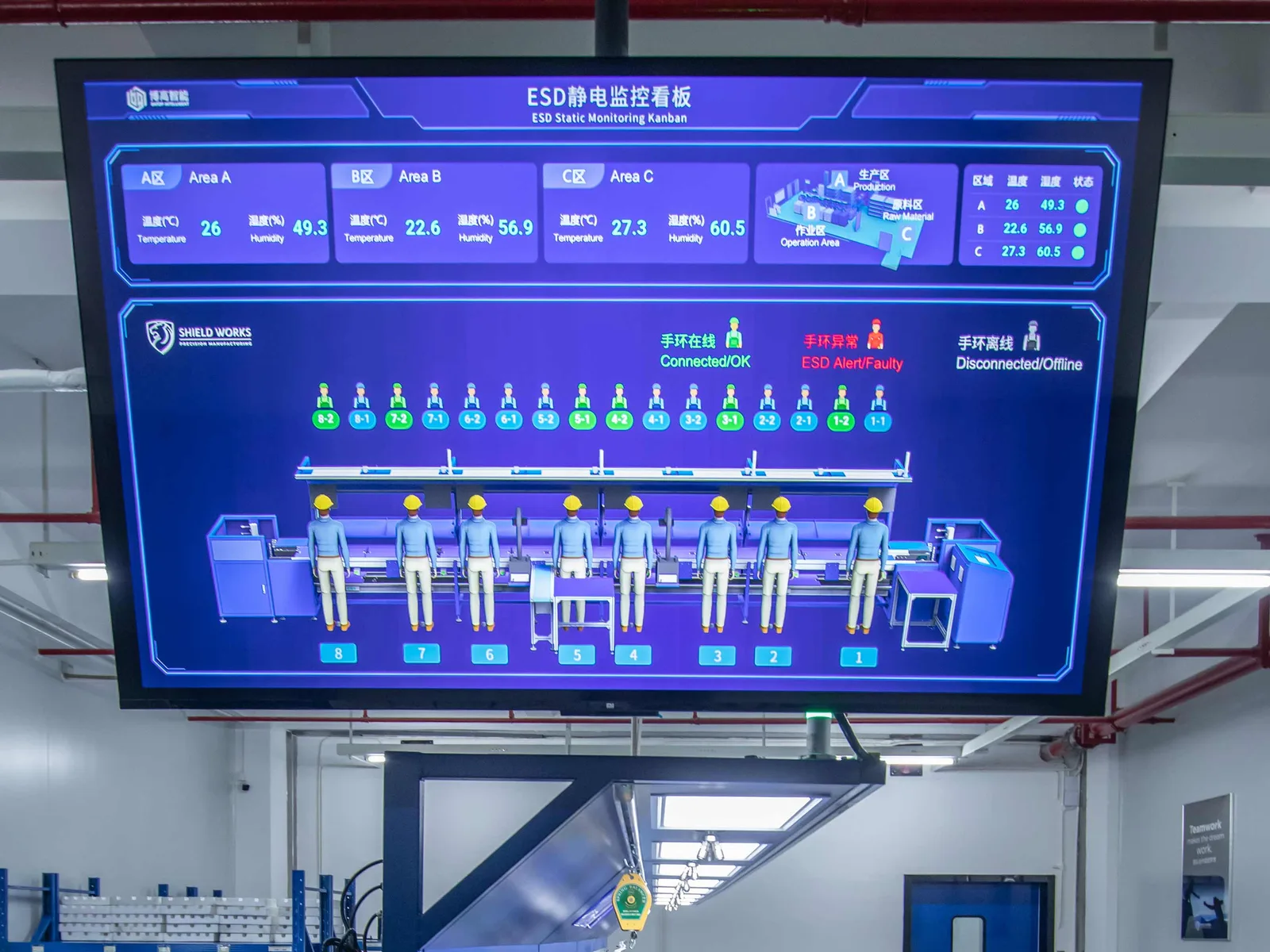
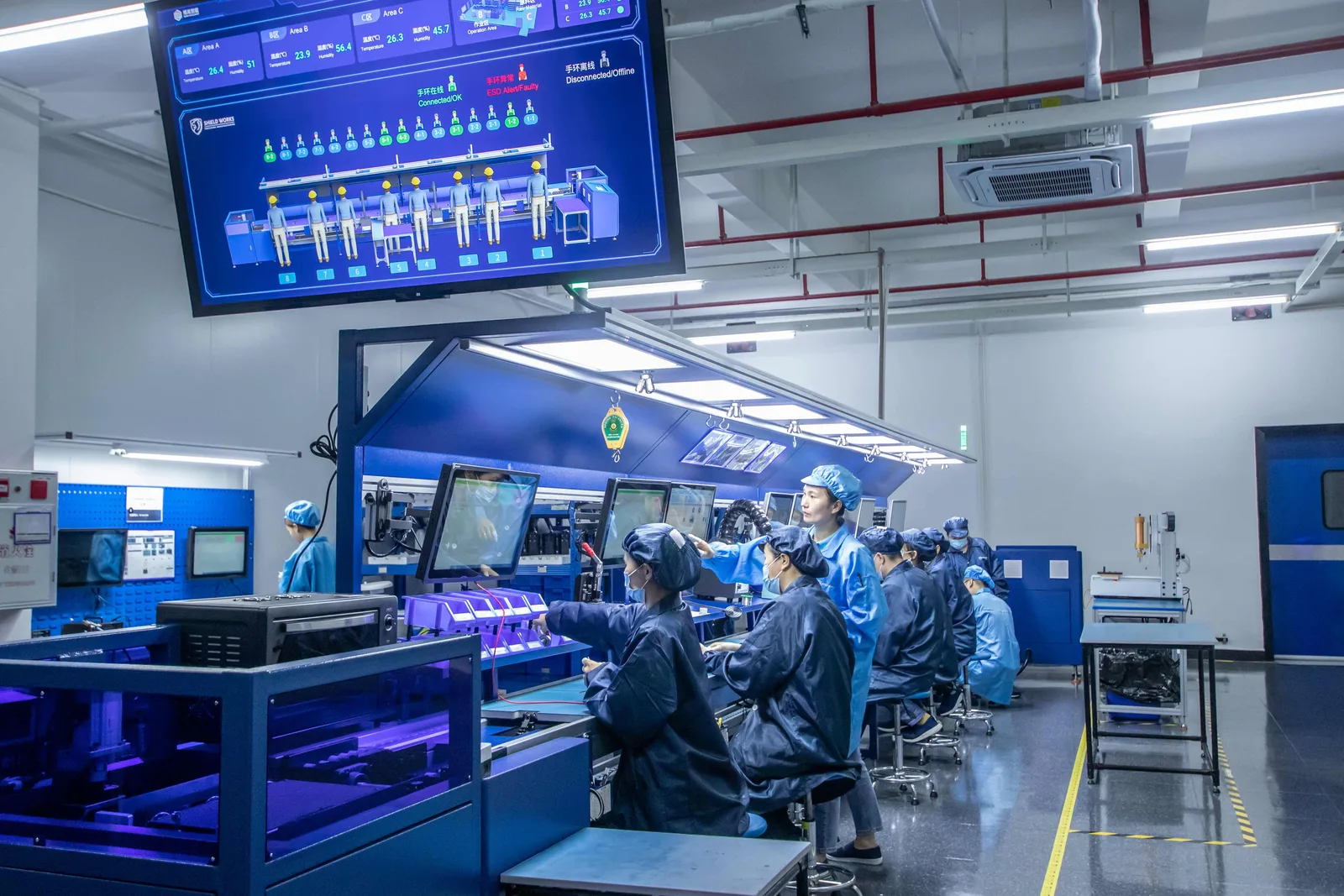
A wearable's board is the densest thing in it and the least forgiving of static. It is assembled in a dedicated ESD-controlled zone at our Zhuhai facility, monitored continuously rather than audited occasionally.

  • Wrist-strap status shown live for every station on the line
  • Temperature and humidity logged for each zone of the room
  • Boards verified in line as they are built, not after
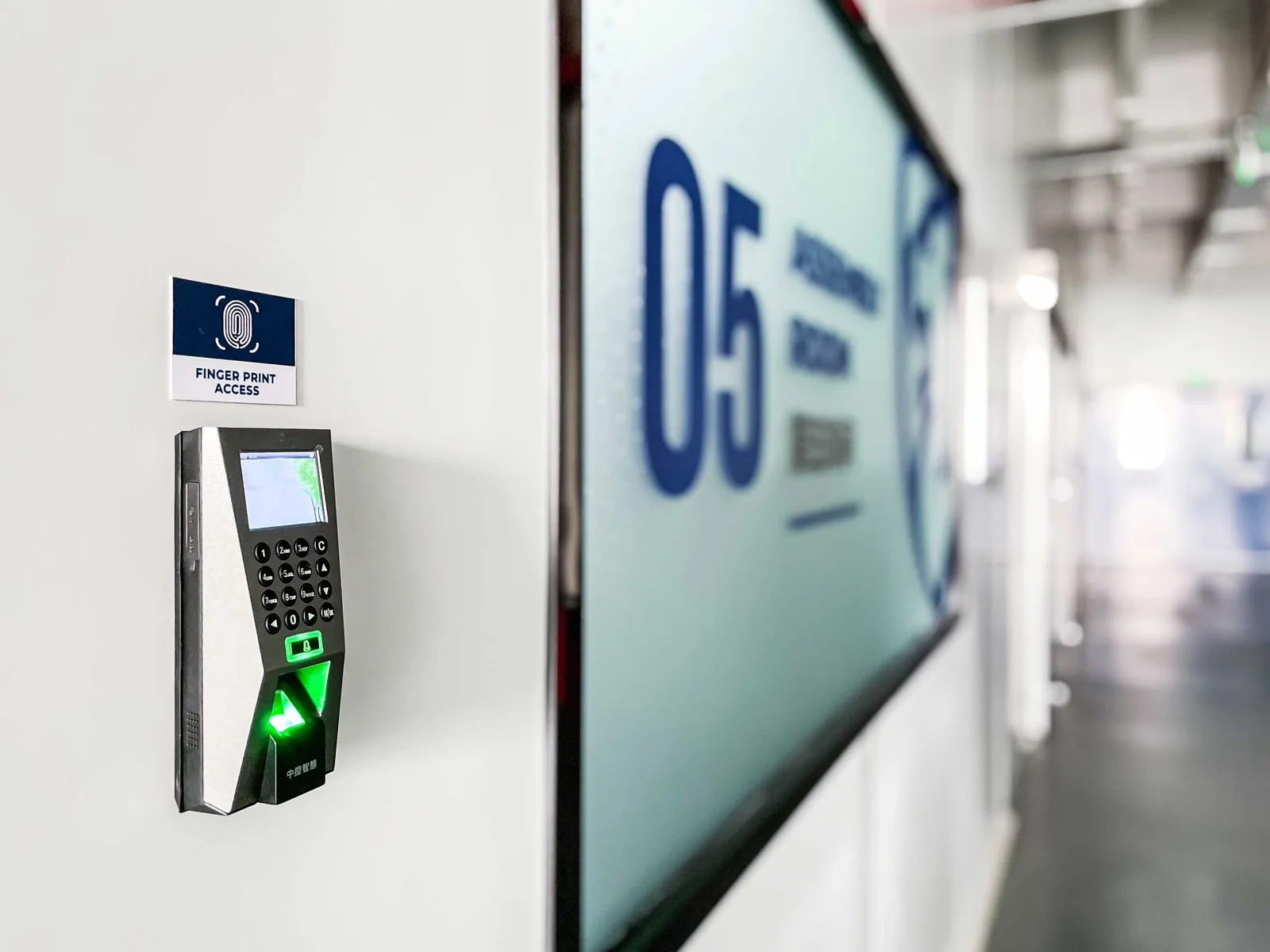
  • Fingerprint-access rooms for IP-sensitive programmes
See PCB assembly and box build
The ESD static monitoring board at Shield Works, showing wrist-strap status for every station and temperature and humidity for three zones
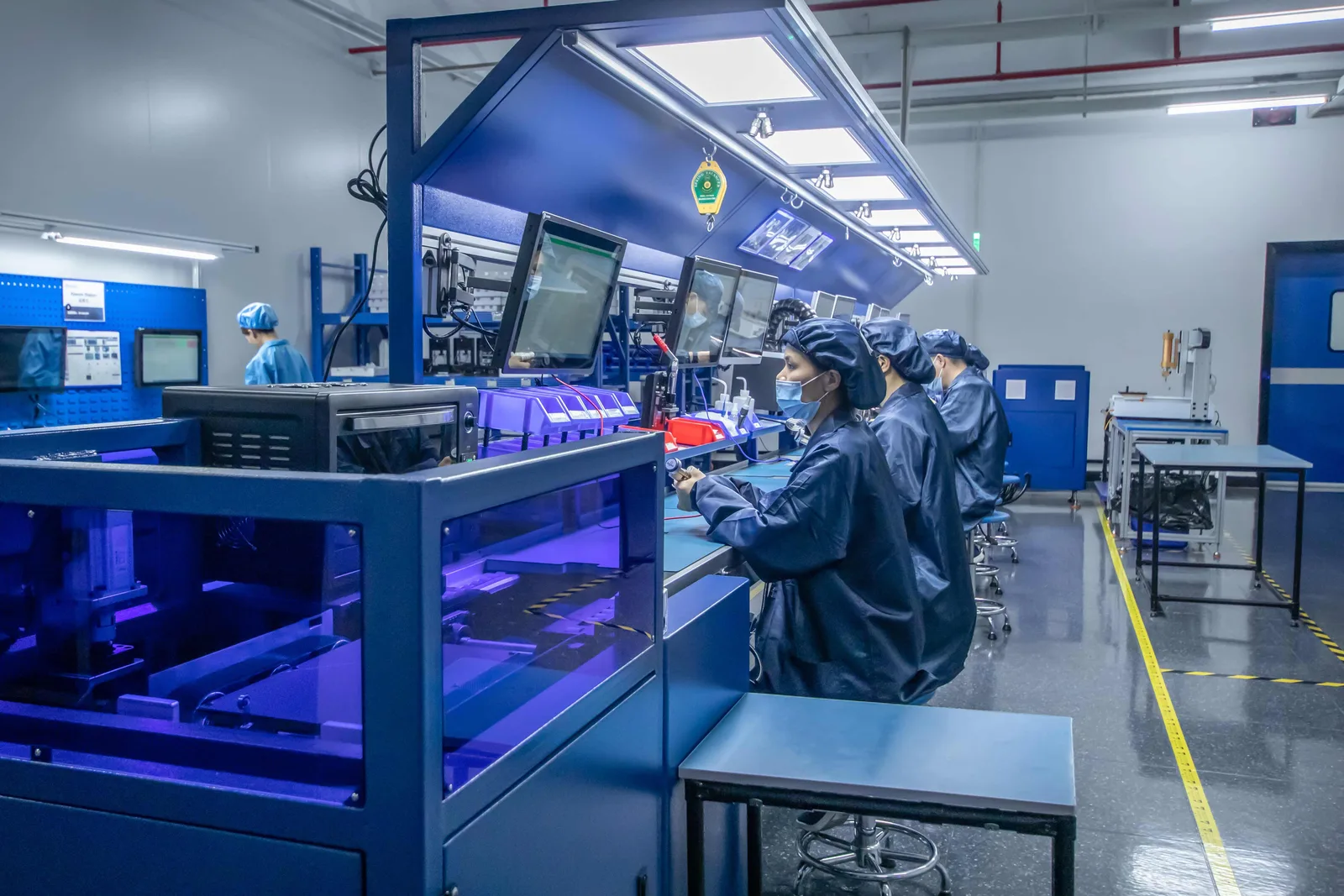
The ESD-controlled electronics line at Shield Works with the monitoring board overhead
Operators assembling and testing PCBs at ESD-controlled workstations with fume extraction at Shield Works
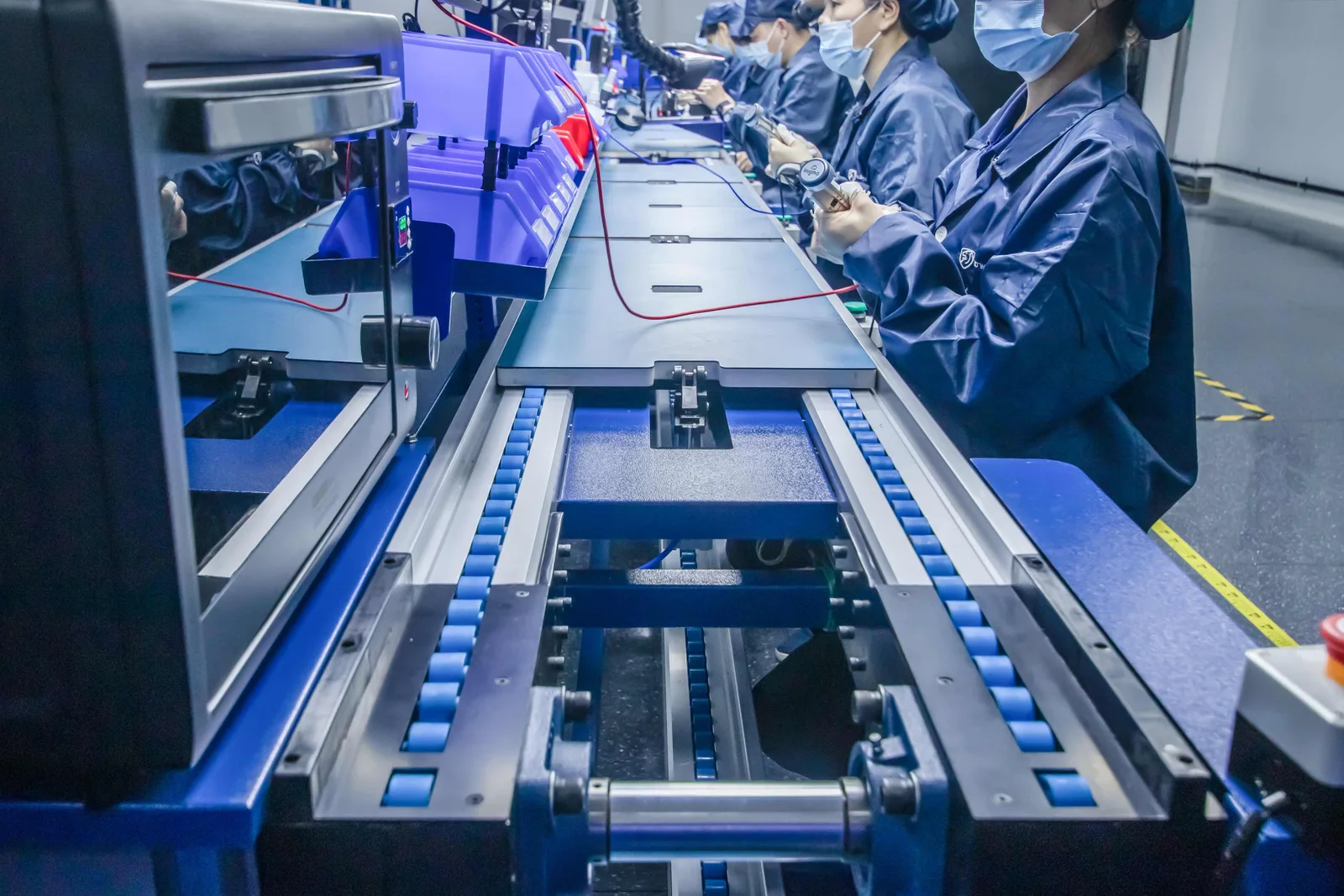
A conveyor running the length of an ESD workbench with operators working alongside it
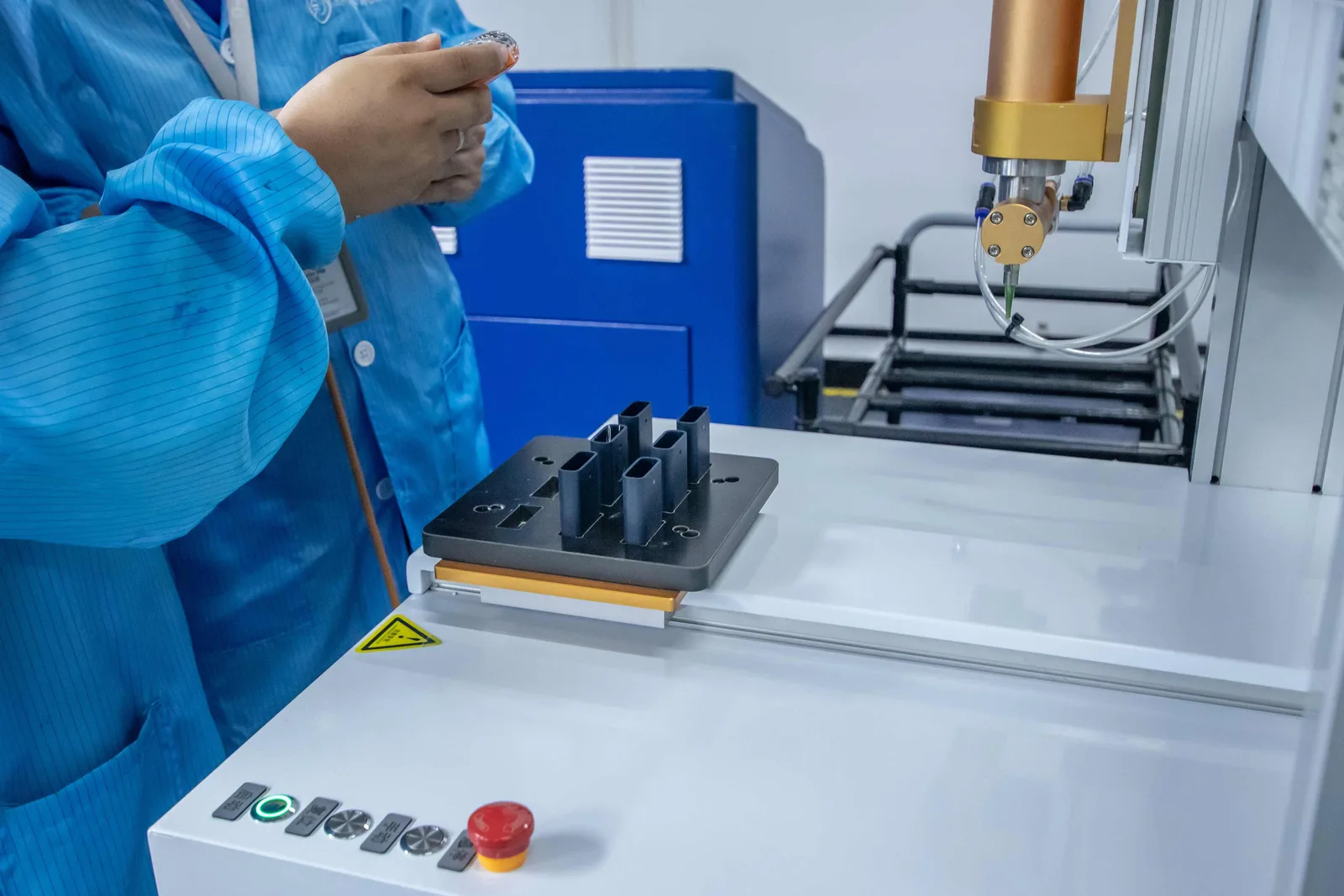
An automated gantry cell working on a fixture of parts, loaded by an operator in an ESD smock
Box build stations inside the ESD-controlled electronics room at Shield Works in Zhuhai
Fingerprint access control unit beside the entrance to a Shield Works assembly room

Certifications

Four international certifications. One facility.

Shield Works is independently certified across three management systems: Quality (ISO 9001), Environmental (ISO 14001), and Occupational Health & Safety (ISO 45001). Also audited annually under SEDEX SMETA, an independent ethical-trade audit covering labour, health and safety, environment, and business ethics.

Certification Standard Accredited By
ISO 9001 Quality Management System BSI ANAB
ISO 14001 Environmental Management System BSI ANAB
ISO 45001 Occupational Health & Safety BSI ANAB
SEDEX SMETA 4-Pillar Ethical Audit Independent third-party

Frequently Asked

Wearable manufacturing, answered.

Can you assemble rigid-flex and high-density boards?

Two parts to this. Bare board fabrication, including HDI stack-ups, rigid-flex constructions and blind or buried vias, is sourced and managed through the C2W Group’s vetted supplier network against your stack-up, impedance and via specification. Board assembly runs in our own ESD-controlled electronics zone: surface-mount, through-hole, cable harnesses and full box build, with in-line verification.

Rigid-flex assembly depends heavily on fixturing and panel design, so send your stack-up and panel drawing with your brief. We will tell you what we run in-house and what we place with a partner before anyone commits to tooling. See PCB assembly and box build.

How small a product can you build?

The constraint is rarely a single dimension. It is component density against enclosure volume, whether the assembly can be fixtured and inspected repeatably, and whether the design leaves any access for rework. Send the CAD and the board outline and we will assess it directly rather than quote you a number that does not mean anything on its own.

We already have an engineering or design partner. Do you replace them?

No, and we would usually advise against it. Most wearable projects arrive with a consultancy or in-house hardware lead who understands the product better than any new party will for months. We take the design into manufacturing alongside them, run DFM against their files, and feed tooling, tolerance and assembly constraints back to their engineers. Where a client wants us to own more of the engineering, we can, but that is a decision rather than a default.

Do you develop firmware and the companion app?

Firmware and app development normally stay with you or your engineering partner, who own the product logic. What we handle on the manufacturing side is production programming and flashing, functional test against your defined pass criteria, and the serial or identifier scheme that links a unit to its test record. See product development.

Can you build a product with a sealed battery and magnetic charging?

Yes. A sealed pack with magnetic or pogo contacts is a common wearable architecture. It brings a set of connected decisions with it, covering charging accessory tooling, ingress sealing at the contacts, cell sourcing and qualification, and the transport documentation for shipping cells internationally. Those are planned into the Route to Market Plan rather than handled ad hoc.

Do you manufacture medical or diagnostic wearables?

No. We build consumer and wellness wearables. Regulated medical devices sit outside what we take on, and a product making a diagnostic or clinical claim needs a regulatory path and a manufacturing partner set up for it. If your product is near that line we will raise it early, because it changes your requirements far more than it changes ours.

What finishes can you achieve on a wearable housing?

Polished and brushed stainless, anodised aluminium in a range of colours, ceramic components, and plated finishes are all routine, in metal and polymer housings alike. The part that matters is not the process list but the control: cosmetic acceptance is agreed against physical boundary samples before the pilot run, so “acceptable finish” means a specific thing both sides have held in their hands.

What are your typical volumes and minimum order?

MOQs are set against your product and stage rather than a fixed table, and a first production run in the hundreds to low thousands is normal for a wearable launch. Projects typically start from USD 10,000 in order value. We would rather build a right-sized first run with room to scale than push you into inventory you cannot sell.

How do you protect our IP during manufacturing?

Fingerprint-access IP zones, a black-box workflow that breaks information into the smallest viable units, strict NDA enforcement, and multi-supplier sourcing so no single supplier holds your complete design. See the full four-layer IP protection model.

Can you handle certification, including wireless approvals?

Yes. We manage CE, FCC, RoHS and related requirements end to end, including the radio approvals a connected device needs. Ingress protection testing is planned against the production-intent build, because a rating tested on a prototype is not a rating you can put on a box.

We are pre-production and partly funded. Is it too early?

No. Working prototype with partial CAD and a first run planned for a specific window is the most common point at which wearable projects come to us, and it is a good one, because DFM still has room to change the design before tooling is committed. What helps most is knowing your target volumes and the date you have committed to, even approximately.

What happens after I submit a brief?

We look at your product, volumes and timeline, assess fit, and reply to most enquiries within 24 hours. If it looks like a fit, we review the project in detail and issue an NDA where needed, then set up a call to confirm scope before we come back with a proposal. All work runs under a paid engagement. Submit your project brief.

A wearable is inspected every single day.

It sits at reading distance on someone who is sweating, knocking it and washing their hands. A finish that photographs well is not the same as a finish that survives that, which is why cosmetics and sealing are specified here as engineering rather than preference.

Start Your Enquiry

Bring your wearable to Shield Works.

Send your CAD, your board outline or stack-up, and the volumes and launch window you are working to. We assess fit and reply to most enquiries within 24 hours.

If it looks like a fit, we review the project in detail and issue an NDA where needed, then set up a call to confirm scope before we come back with a proposal. All work runs under a paid engagement.

Tell Us About Yourself

Step 1 of 3

We review every submission. If it's a fit, we reach out to discuss requirements and propose next steps.