

SHIELD WORKS · ROBOTICS & AUTOMATION HARDWARE

Robotics and automation hardware, assembled under black-box protocols.

Contract manufacturing for robotics builders: precision mechanics, ESD-controlled electronics, and system integration, with IP protection layered the way robotics IP is.

What we build for robotics companies.

Shield Works provides contract manufacturing for robotics and automation hardware from an ISO-certified, British-owned facility in Zhuhai, China.

Mechanical structures, actuators, sensor modules, and control electronics are sourced across vetted suppliers, integrated and calibrated in-house, and protected by black-box workflows and supplier isolation.

Who We Are

Built for systems where everything matters.

A robot is the definition of a multi-supplier, multi-component product: machined structures, motors, boards, optics, harnesses, and firmware, often from a dozen sources, all of which must integrate and calibrate as one system. Coordinating that chain while keeping the design confidential is the core of what Shield Works does.

Hardware teams use us for complete builds and for the IP-critical sub-assemblies they cannot risk elsewhere, with engineering-level communication in plain English at every step.

See our precision assembly services

Why Choose Shield Works

Built for teams shipping hardware that thinks.

Safeguarding your innovations

Robotics IP is layered. So is our protection.

Mechanics, sensing, control firmware, and AI models each carry their own IP. Black-box workflows compartmentalise all of it: operators see their task, suppliers see their component, and only you and vetted upper management ever see the complete system.


Multi-component integration

Electro-mechanical is the home game

Actuators, machined structures, harnesses, sensor arrays, and control boards from many suppliers, inspected on arrival and integrated into working units in-house, under one inspection regime.

ESD-controlled assembly

Electronics built where they belong

Control boards, sensor modules, and vision systems are assembled in a dedicated ESD-controlled room with real-time environmental monitoring and in-line verification.

Quality proven in motion

Functional test on every build

Motion, load, and functional testing against your specification, with calibration procedures agreed up front and dual-layer verification by an independent C2W Group engineer.

British management

Western standards on the floor

British owned and managed, with Western engineering oversight, transparent reporting, and binding NDAs signed before any technical discussion.

C2W Group heritage since 2005

Two decades of complex, automated builds

Backed by the C2W Group’s 20 years of China manufacturing across precision mechanical, electronic, and electro-mechanical products. Recent automation and complex-machine builds prove it: an automated ingredient-weighing system accurate to 0.1 grams taken into mass production, and a one-of-a-kind countertop machine moved from complex prototype to volume.

What We Build

Robotics and automation hardware.

Electro-mechanical systems engineered for repeatable assembly, calibration, and field reliability, from consumer robots to industrial automation components.

Service & consumer robots

Consumer and service robotics with integrated drive systems, sensing, and app-connected control.

Robotic arms & actuators

Arm assemblies, joints, and actuator units machined and assembled to tolerance, with calibration at build.

AGV & AMR sub-assemblies

Drive units, chassis assemblies, and sensor packages for autonomous guided and mobile robots.

Sensor & vision modules

Camera, lidar-adjacent, and sensor module assembly in the ESD-controlled electronics zone.

Control units & electronics

Controller boards, power management, and wiring systems built and functionally tested in line.

End effectors & tooling

Grippers, end-of-arm tooling, and custom fixtures combining machined parts, sensors, and pneumatics.

Our Development Process

From system architecture to shipped units, in six managed steps.

Step 1

Evaluation & consultation

Share your concept, materials, target market, and production goals. We sign an NDA before specifics are discussed, then assess feasibility and the best path forward.

Step 2

Route to Market Plan (RTMP)

A structured manufacturing roadmap for your product: key stages, estimated costs, and production timelines, agreed before tooling money is committed.

Step 3

Product definition & prototyping

Engineering files refined into physical prototypes, iterated until materials, function, and durability are proven rather than assumed.

Step 4

Design for manufacturing (DFM/DFMA)

Bill of materials, tolerances, and assembly workflows finalised for repeatable production, eliminating manufacturing problems on paper rather than on the line.

Step 5

Mass production & assembly

A pilot batch verifies every component against specification before full production. Multi-supplier sourcing means no single supplier ever sees the complete design.

Step 6

Quality control & logistics

Every batch is inspected against your agreed criteria, then packed, consolidated, and shipped from our own warehouse, in secure custody until it leaves for your market.

The ESD Electronics Room

Control electronics are built in a controlled room.

Sensor modules, control boards and harnesses are assembled in a dedicated ESD-controlled zone at our Zhuhai facility, then integrated into the mechanism by the same team.

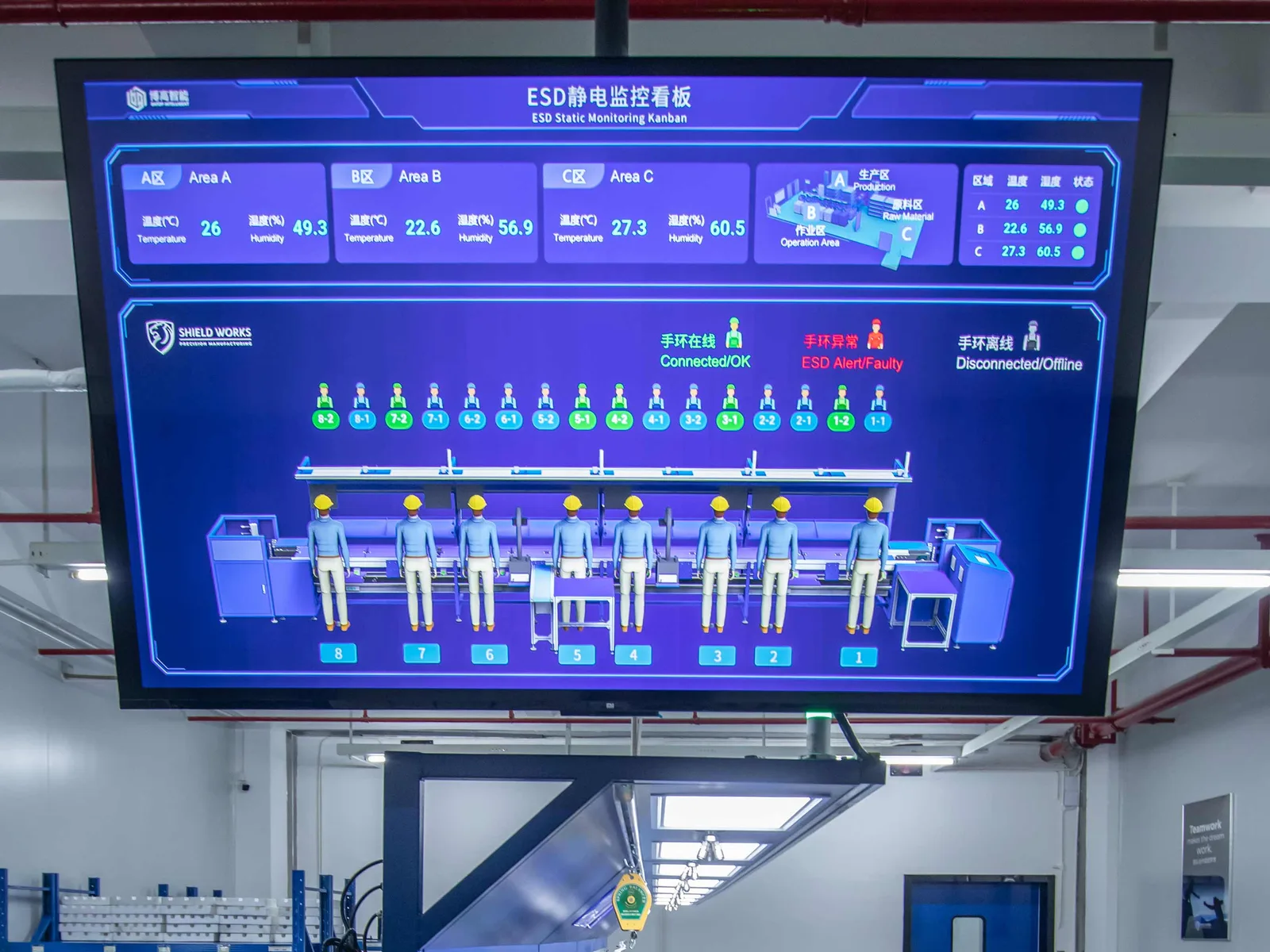
  • Wrist-strap status shown live for every station on the line
  • Temperature and humidity logged for each zone of the room
  • Boards verified in line as they are built, not after
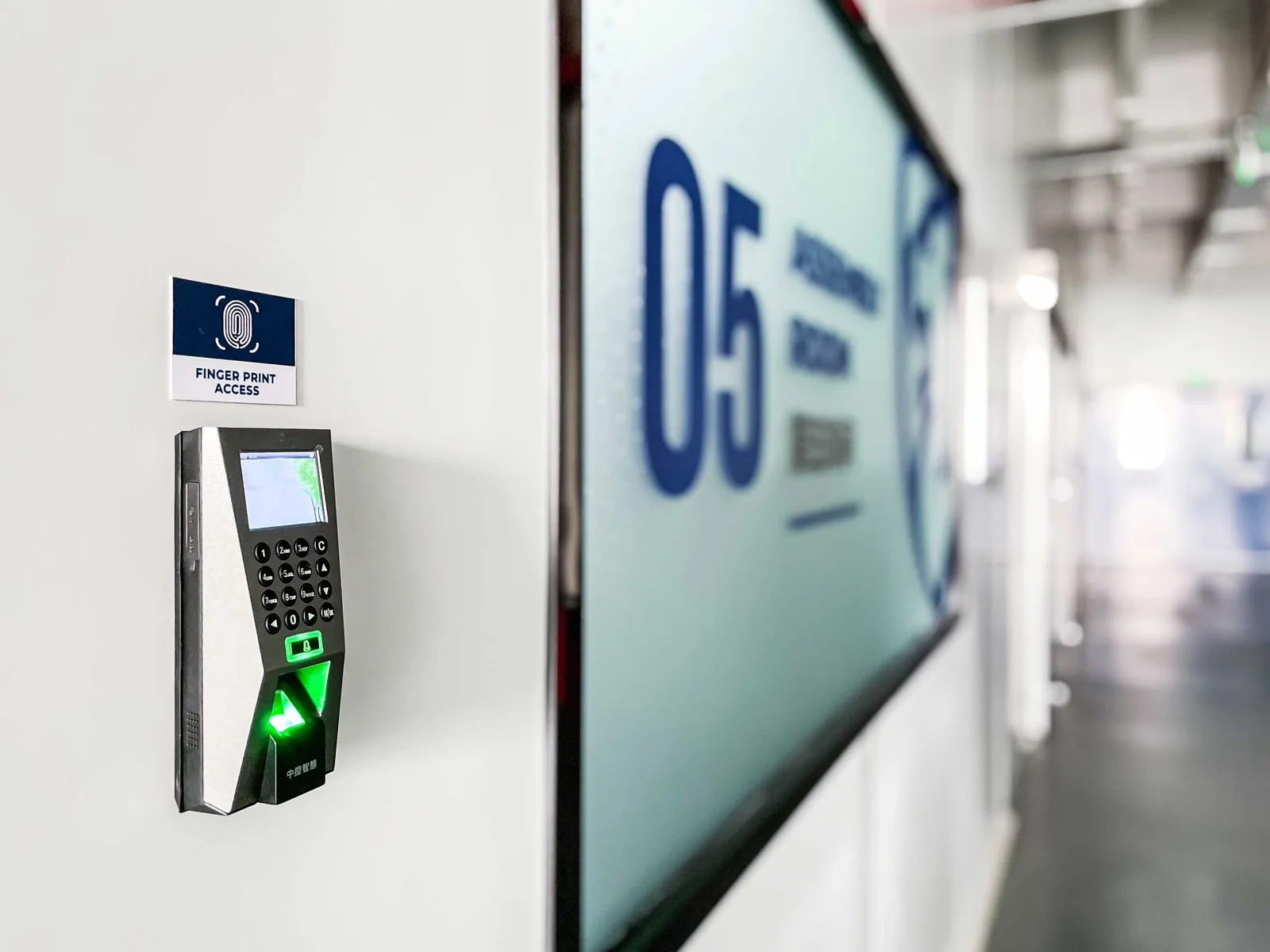
  • Fingerprint-access rooms for IP-sensitive programmes
See PCB assembly and box build
The ESD static monitoring board at Shield Works, showing wrist-strap status for every station and temperature and humidity for three zones
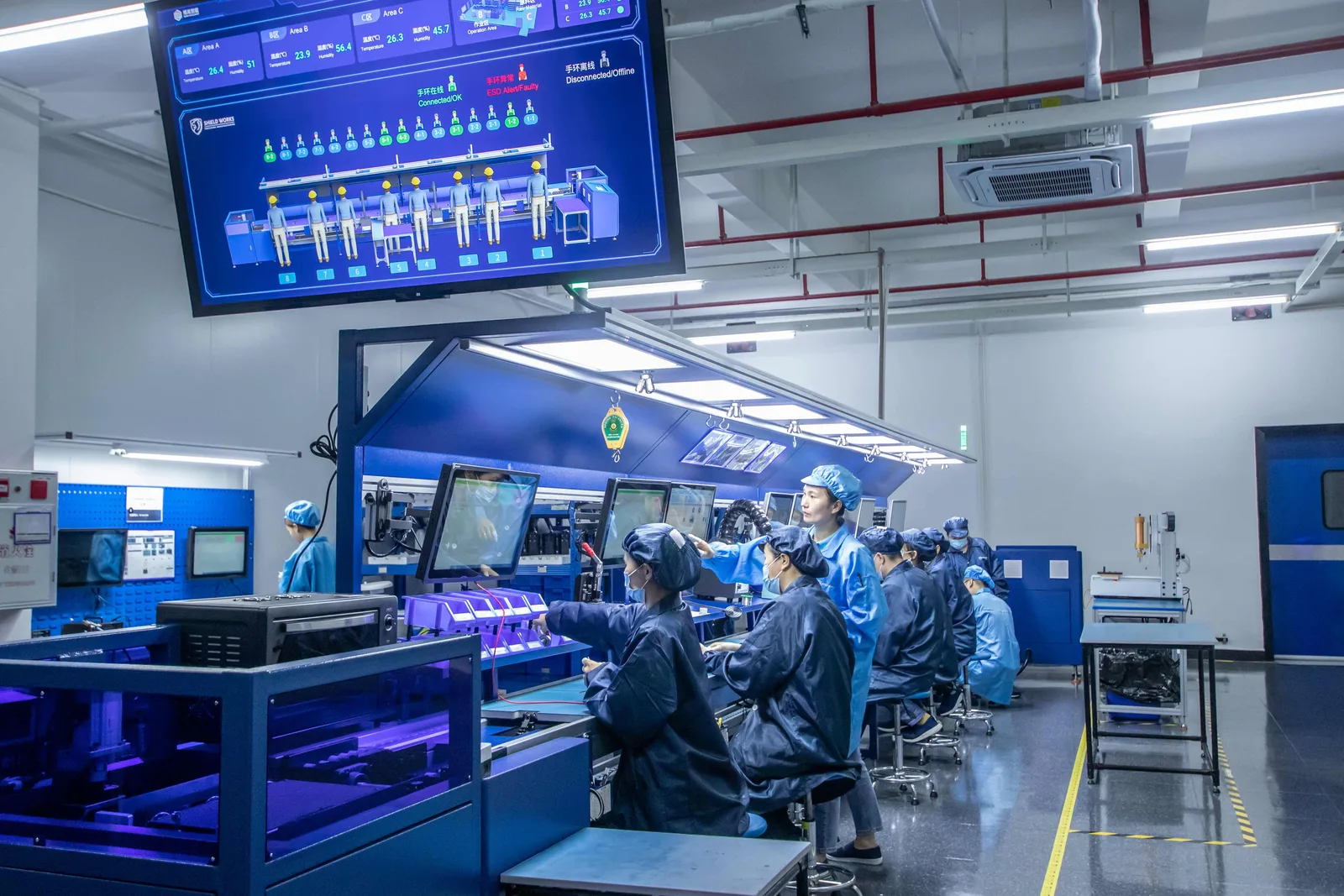
The ESD-controlled electronics line at Shield Works with the monitoring board overhead
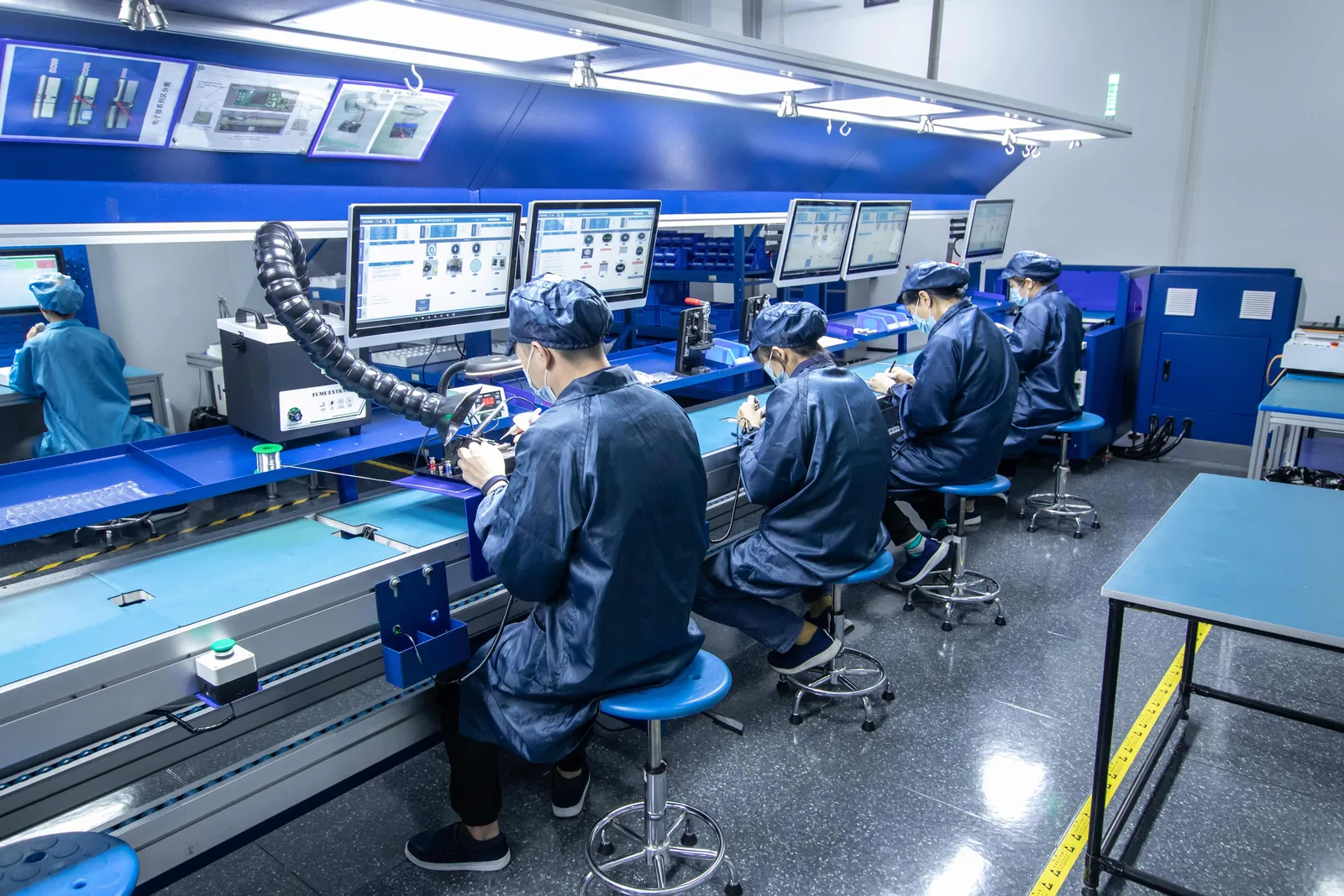
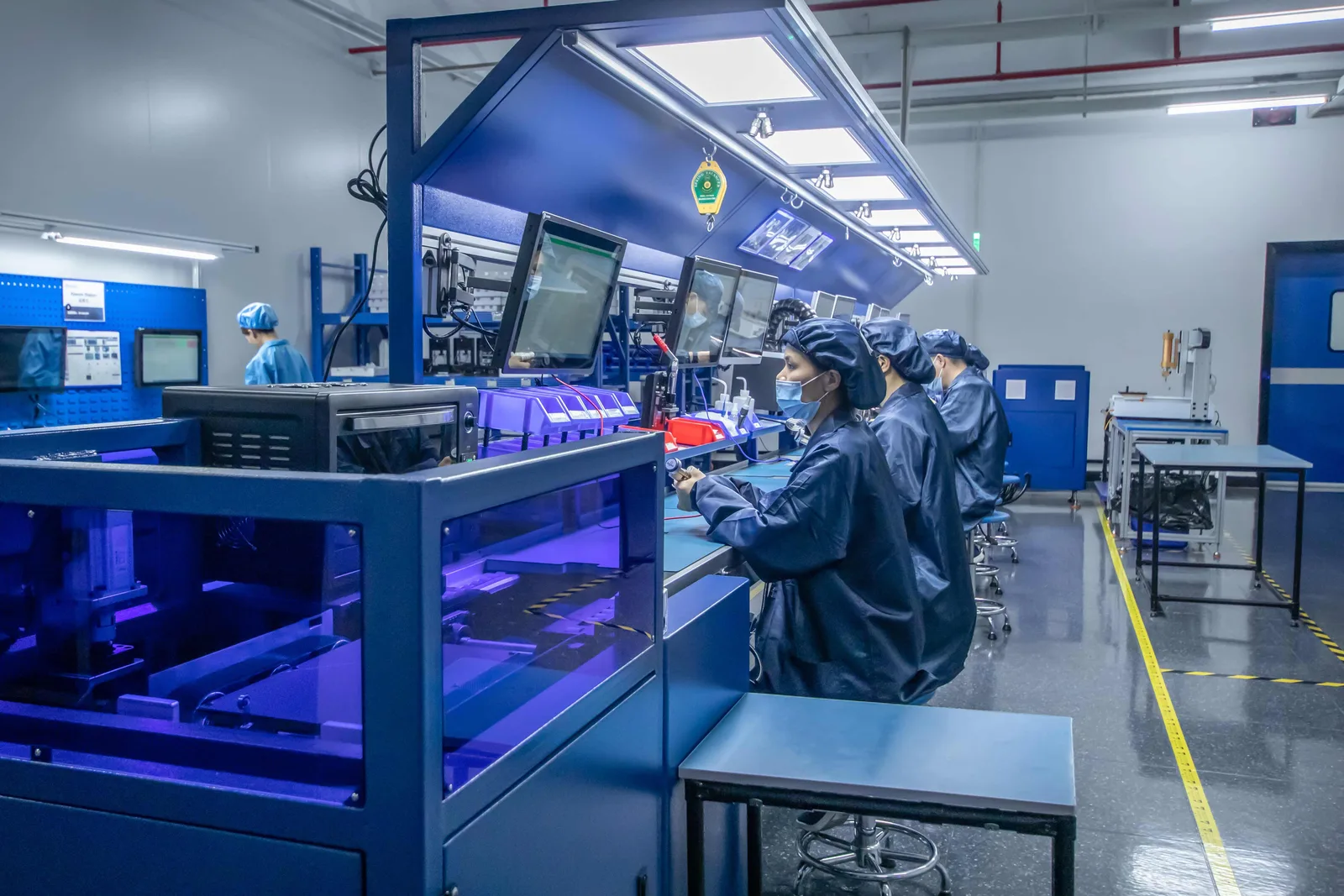
Operators assembling and testing PCBs at ESD-controlled workstations with fume extraction at Shield Works
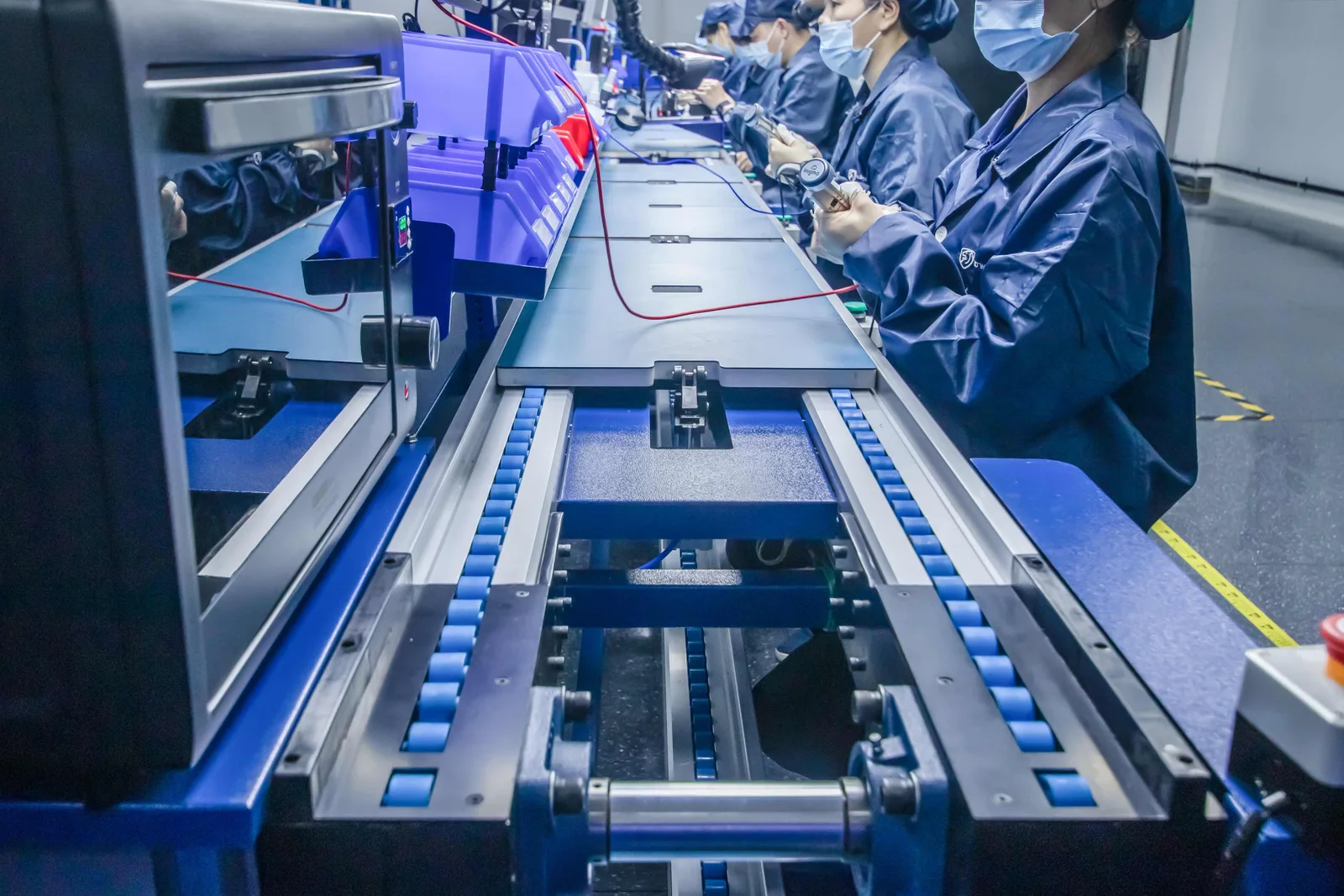
A conveyor running the length of an ESD workbench with operators working alongside it
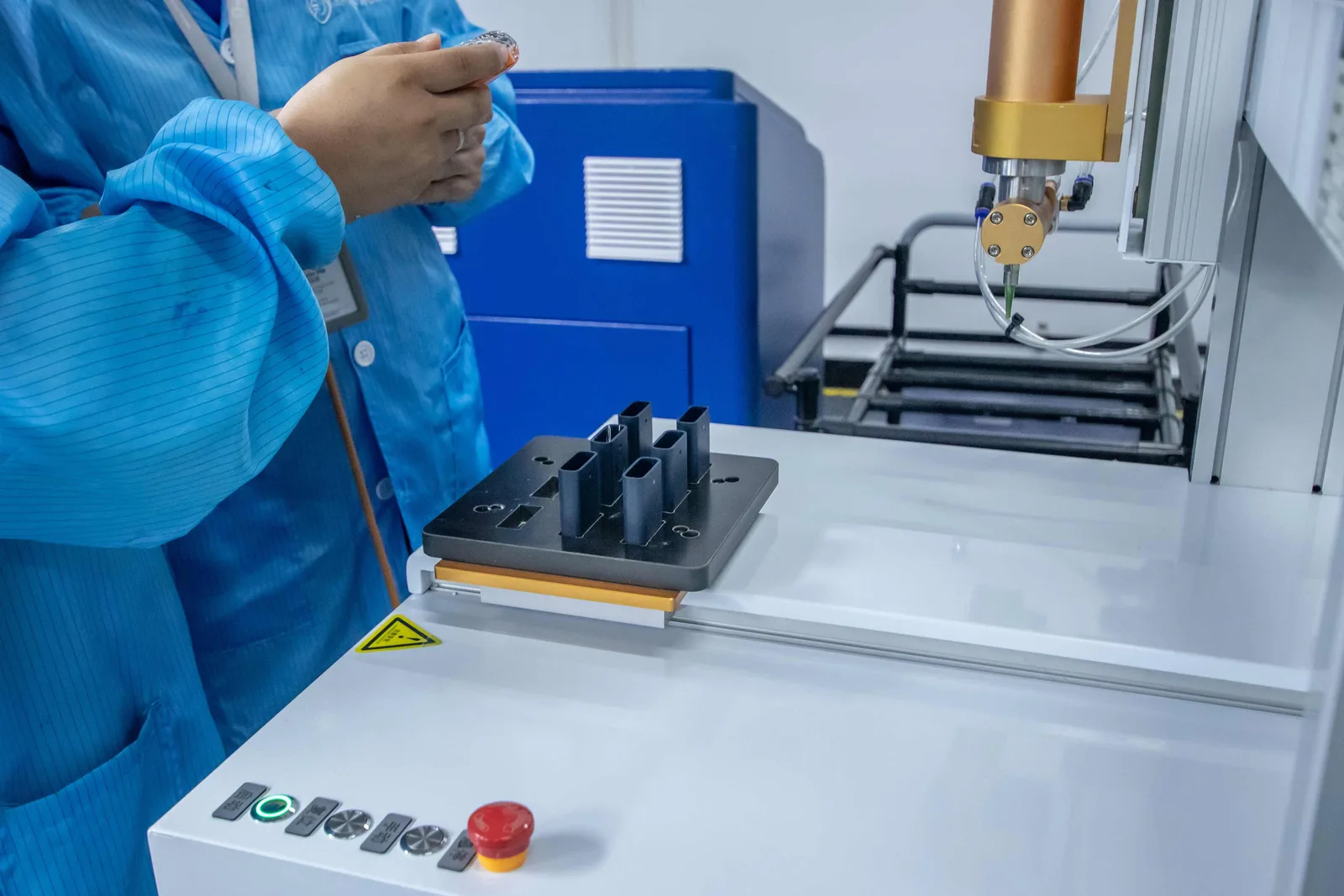
An automated gantry cell working on a fixture of parts, loaded by an operator in an ESD smock
Box build stations inside the ESD-controlled electronics room at Shield Works in Zhuhai
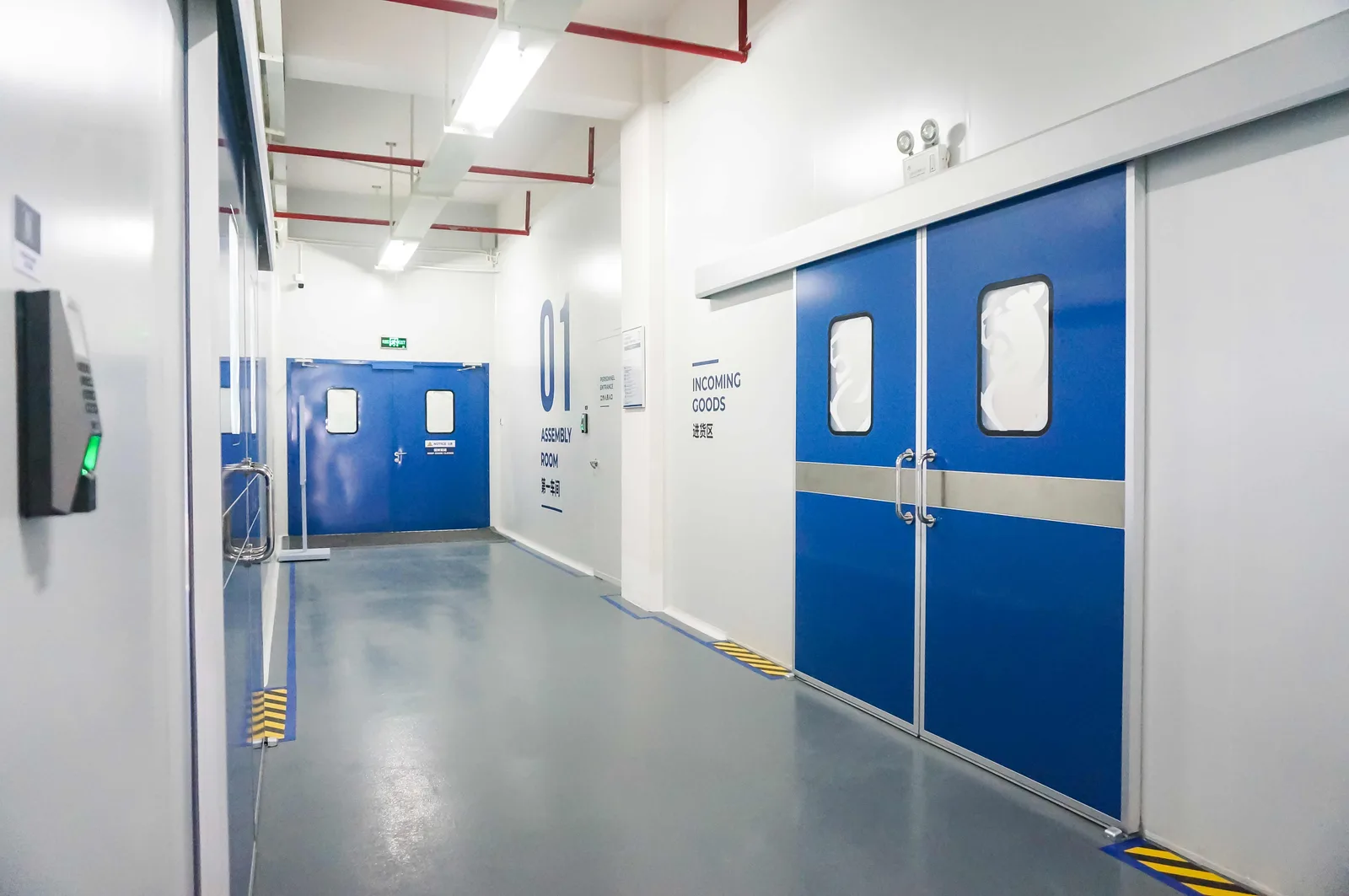
Fingerprint access control unit beside the entrance to a Shield Works assembly room

Certifications

Four international certifications. One facility.

Shield Works is independently certified across three management systems: Quality (ISO 9001), Environmental (ISO 14001), and Occupational Health & Safety (ISO 45001). Also audited annually under SEDEX SMETA, an independent ethical-trade audit covering labour, health and safety, environment, and business ethics.

Certification Standard Accredited By
ISO 9001 Quality Management System BSI ANAB
ISO 14001 Environmental Management System BSI ANAB
ISO 45001 Occupational Health & Safety BSI ANAB
SEDEX SMETA 4-Pillar Ethical Audit Independent third-party

Frequently Asked

Robotics manufacturing, answered.

What robotics manufacturing services does Shield Works offer?

Contract manufacturing and assembly for robotics and automation hardware: component sourcing across vetted suppliers, precision mechanical work, ESD-controlled electronics assembly, integration, calibration, and functional testing, all under one roof in Zhuhai.

How do you protect robotics IP, including AI models and firmware?

Firmware and models are loaded under role-restricted protocols and never distributed to suppliers. Design data is compartmentalised, each client project is isolated, and IP-sensitive builds run in fingerprint-access rooms. See the full IP protection model.

Can you handle calibration and functional testing?

Yes. Calibration procedures and functional test protocols are agreed against your specification and run on every unit or batch as required, with documented results delivered by an engineer independent of the production team.

Do you build complete robots or sub-assemblies?

Both. Some clients run complete unit builds with us; others use Shield Works for IP-critical sub-assemblies that are integrated elsewhere. Either way, no supplier in the chain can reconstruct your complete system.
What volumes do you handle?

From pilot and low-volume runs, which are common in robotics, through to scaled production. We do not run a fixed minimum order quantity, but projects typically start from USD 10,000 in order value.

Can you support DFM for a robot still in development?

Yes. Our R&D team runs DFM review, prototyping, and engineering refinement before tooling, which matters doubly in robotics where unit cost lives or dies on assembly time. See product development and DFM.

What happens after I submit a brief?

We look at your system architecture and requirements, assess fit, and reply to most enquiries within 24 hours. If it looks like a fit, we review the project in detail and issue an NDA where needed, then set up a call to confirm fit before we come back with a proposal. All work runs under a paid engagement. Submit your project brief.

Motion is where tolerance stacks show up.

Every axis, bearing and fastener in a moving assembly compounds whatever slop sits upstream of it. Robotics is where design for manufacturing stops being a cost exercise and becomes the difference between a machine that repeats and one that drifts.

Start Your Enquiry

Bring your robotics hardware to Shield Works.

Send your system architecture, your actuator and sensor specification, or a description of the machine you are building. We assess fit and reply to most enquiries within 24 hours.

If it looks like a fit, we review the project in detail and issue an NDA where needed, then set up a call to confirm fit before we come back with a proposal. All work runs under a paid engagement.

Tell Us About Yourself

Step 1 of 3

We review every submission. If it's a fit, we reach out to discuss requirements and propose next steps.